Monday, 30 September 2013

Emotional Contagion 2

for the majority of their existence games have been considered simple or a child's plaything and never considered as anything more. They, for a long time, have been disregarded by the art community because they could not see beyond the pieces, rules, and controls to what lied underneath. They believed, in part, that games could not invoke the emotions and spark the imagination of gamers as art should. But as I have mentioned before, games have been doing just that for quite some time. It is only within the last 10 or so years that games have been coming into the spotlight as art, this being due to the increase in quality of the writing and graphics. 

Before, games typically used symbolic pieces that represented players, enemies, and obstacles and boards that represented the world of the game. Some games didn't even use boards or pieces, only pencil and paper. These games required you to learn rules and use one's imagination to "see" the happenings of the game such as in the classic role playing game Advanced Dungeons and Dragons. 
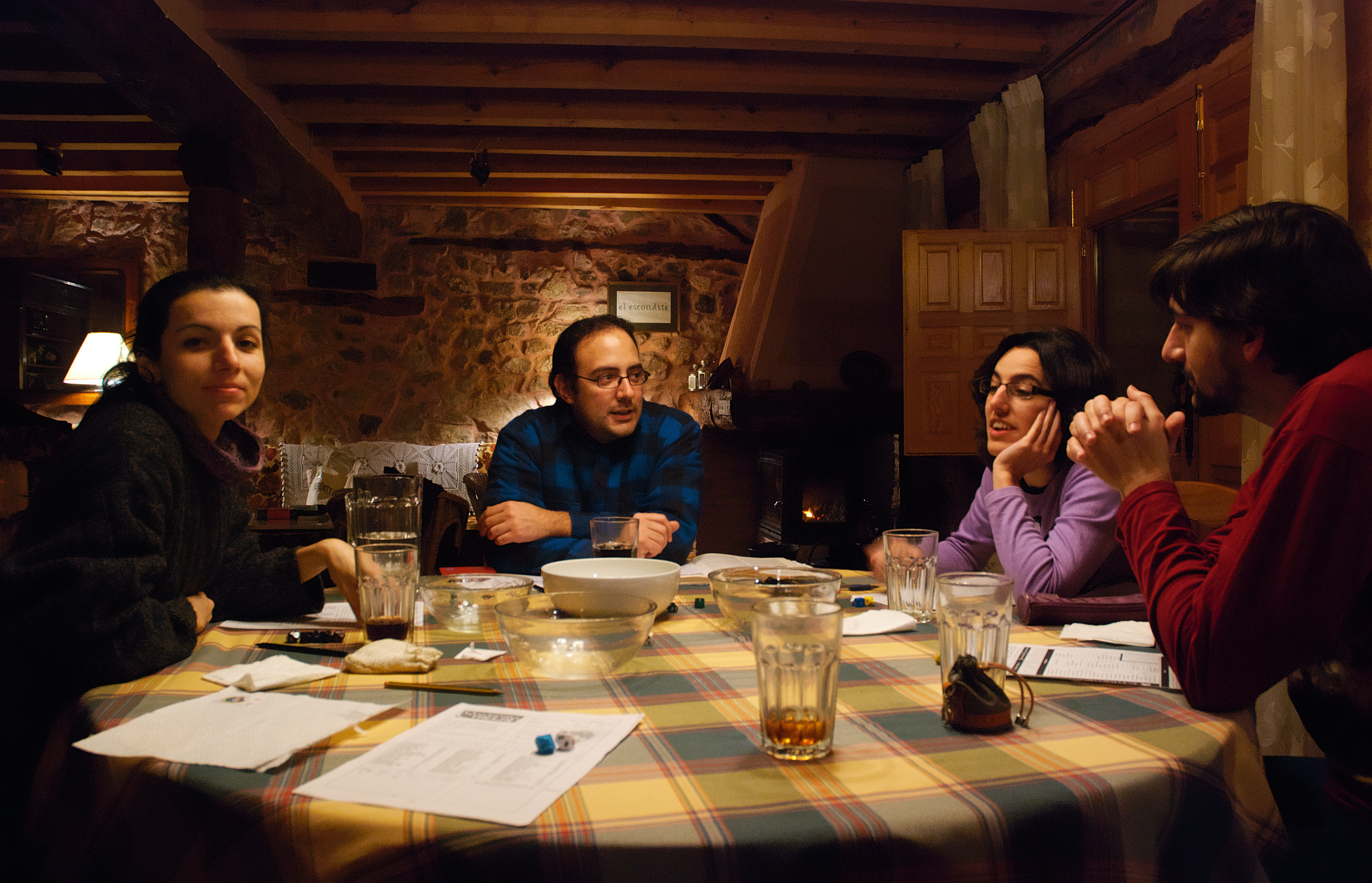

Even after videogames were invented and much of the rule keeping and mechanics were handled by the game itself, games in general were still seen as playthings. This due to the need for players to use their imaginations as these primitive games still required players to "fill in the blanks" the game presented due to their technological limitations, such as imagining a players voice, and their actions within games. 

How can you not feel rage when look at his face?
But, as mentioned before, in the last 10 years or so that games have become more accessible to the general public as the writing and graphics have increased in quality. This is most evident in the popularity of the original God of War game. This game presents the classic tale of revenge while instilling the emotions of rage, hate, and sorrow within the player. This was achieved through the use of voice acting, high graphics quality, and an appropriate soundtrack. After all, it is much easier to feel as the main character, kratos, does when you can see and hear the rage and hate he has for the god, Ares. 

Everything about him screamed rage, from his character design to the brutality of his actions and the gruffness of his voice. It instantly made me feel for him and his hate towards the Ares as I brutally tore apart legions of minions seeking to get the way of Krato's revenge, of MY revenge. 


The game also gives the player a sense of wonder that stirs their imagination  through its use of sweeping landscapes and larger than life boss battles. 


In conclusion, the God of War game was a beautiful game that struck me emotionally and sparked my imagination through its use of modern graphics, character design, and level design. It represents the movement of games from simple playthings to a serious medium within the eyes of the general public and the art community. 

sources 

http://upload.wikimedia.org/wikipedia/commons/b/be/Role_playing_gamers.jpg 


Design Your Game Item


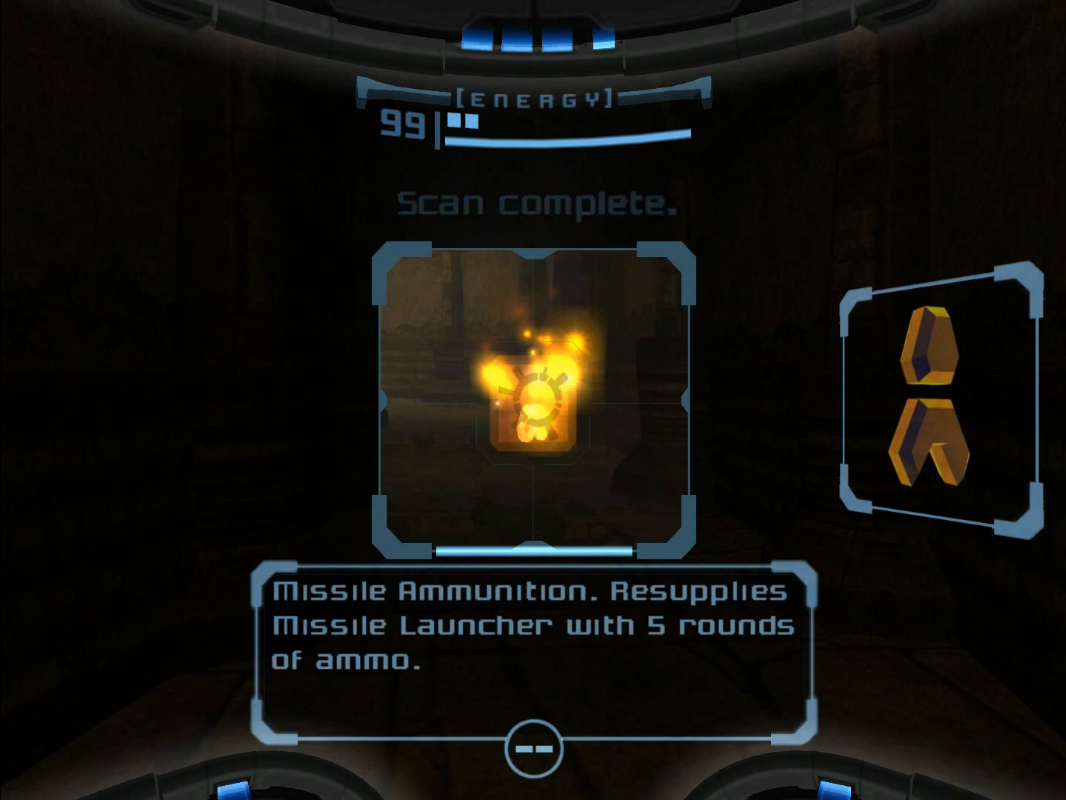
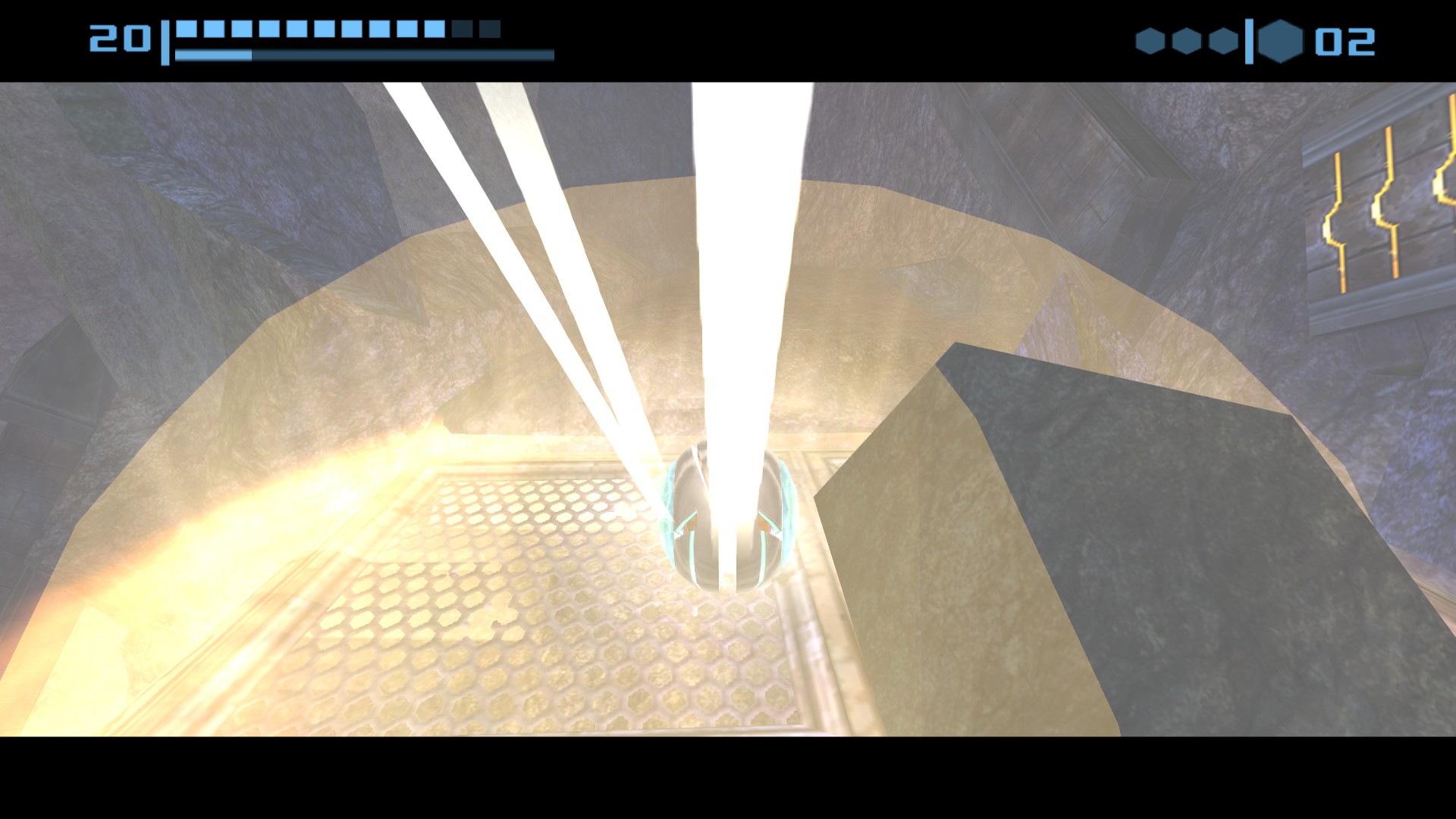
Game mechanics can be thought of as a set of rules within a game that allow gameplay to happen. In videogames these mechanics are usually presented to the player in the form of items that they encounter within the game world. These items give the player access to new abilities allowing them to access new areas and perform new feats and strategies. A clear example of this is Metroid Prime because initially the player has little more the basic beam weapon but as they progress through the game they obtain other beam weapons allowing them access to other parts of the world as well as allow them to be able to take on different enemies as well as to more efficiently deal with older ones.


Within the game Metroid Prime you play as the intergalactic bounty hunter Samus Aran and take part in her missions to destroy the space pirates who have set up a base on Tallon IV. During your adventure you find numerous items like suits such as the Varia Suit and weapons like the Plasma beam which allow the player to deal with different enemies and access more of the world. Though there is one item I thought the player could use in their battle against a certain enemy, that being the chozo ghosts that appear within the game, usually around chozo temples.

These enemies are quite fast and I believe that the player could have  made use of an item I call the tachyon bomb which when detonated slows the movements of all enemies and objects within its blast radius except the player this allows the player to more easily hit the chozo ghosts. This item would also give the player additional options in how to deal with other enemies as the slowed time would also effect blaster shots as well allowing the player to fire multiple shots that hit the target at the same time or from different angle simultaneously.

This new mechanic also allows the designers to implement additional puzzle elements such as multiple sensors that must be shot at the same time in order to trigger or obstacles (such as spike walls or pulverisers) that move too fast for players to navigate by any other means.


The tachyon bomb would be on the same level as the power bomb item as Samus only has a limited number of them and must replenish them through pickups. This keeps the item from being abused by the player and forces them to think about when and where to use them as well as makes the player try to make every bomb count.

sources 


Friday, 27 September 2013

Emotional Contagion


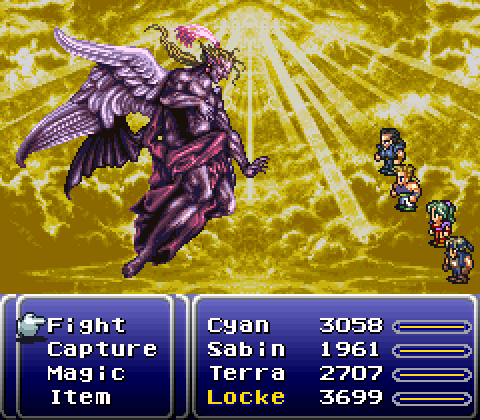
For a long time game developers have been striving to transcend the normality of games being simply a source of entertainment. To make games more than just pieces on a board or sprites on a screen, they sought to make them an experience. To draw players into the world of the game, to sweep them up in the emotions of the characters, hold them at the edge of their seat, and leave them inspired. Some would argue that games have yet to achieve this level of depth. But some, including myself, would argue that games have touched us on an emotional level and inspired us to many things.


ooh gotta love dialogue!
Personally, there have been quite a few games that have affected me but one such game was Final Fantasy 7. The Final Fantasy series is well known for its deep stories and Final fantasy 7 was no different. The basic storyline was the usual “group of heroes save the world from a great evil” type story but it was the characters and the relationships between them that drew me into their world and caused me to become attached to these characters.  Given that before I owned the Playstation I only had the NES of which I only had five games, it is safe to say that I had never I had never experienced characters like that before, with sorrowful pasts and hopes for the future. Alongside the writing and design of the characters and story was the graphics which in my opinion helped to instill the characters within the hearts of the players. I will admit that the overall graphics for the game were pretty bad but it was because of these graphical limitations that further allowed the player to more easily become invested in the characters because they made the player fill in the blanks of the characters and what was happening on screen therefore allowing the player to project themselves or at least a part of their imagination onto the characters making them more endearing to the player.


Another memorable part of the game was its use of pre-rendered cinematics. These cinamtics noted special events that happen throughout the story, usually showing key events that progress the story and pull the player deeper into the game. These cinematics were so different in graphical style to the graphics of the game world that they inherited a kind of ecstatic feel to them. The player, already wrapped in the emotions of the characters leading up to that moment are pushed further emotionally when the cinematic starts as control is taken away from the player as they watch eagerly to see what will happen next. The perfect example of this was the part of the game where Aerith is killed. The area leading to the cutscene is triggered is a set of jumping platforms that keep Aerith in sight of the player. This invokes the emotions of the player who, already excited and emotional to be so close to meeting Aerith again, is forced to slow down. Then within the cutscene the death of Aerith is drawn out, which really drives home the gravity of what just occurred.


In conclusion, games have been emotional quite some time it is only that people haven’t given the medium a chance to stire their emotions and spark their imagination.  


http://borderhouseblog.com/wp-content/uploads/2011/01/ff7logo.jpg
http://img121.imageshack.us/img121/909/512o.jpg
https://www.youtube.com/watch?v=WNgcATFUyr0


Friday, 12 April 2013

There Is No Class Like Shader Class

I will admit right away that I am not much of a coder, but I am a gamer. A gamer looking to make his way into the industry and one thing that is absolutely necessary to doing well in the gaming world is having a working knowledge of shaders. Why? Simple. BECAUSE SHADERS ARE EVERYWHERE IN GAMES!         You couldn't squash a goomba now a days without using at least one shader running. But why is this so, why have shaders become so prevalent within games that they have become indispensable? This is because shaders have given developers the power to manipulate every aspect of the rendering pipeline allowing them to create effects of great realism and impact.

The class I am currently enrolled in is called Intermediate Computer Graphics and it is an amazing course, The class introduces students to the world of shaders. This wonderful class is taught by Andrew "Shaderman" Hogue PhD. This guru of Gaussian, this sultan of shadows, this master of mesh is responsible for teaching students about the inner workings of shaders and their many, many applications. His classes are very fast paced and jam packed with information but his good nature and upbeat attitude keep it at least a little bearable, though it would be nice to be able to go through them at a more comfortable speed. But then again that's what the office hours are for right? These classes are accompanied by tutorials taught by Daniel Buckstein who is also an amazing teacher capable conveying informations in a hilarious and enjoyable manner though he seems to have a strange fixation on cheeseburgers.

All in all the course is a fast paced, helter-skelter, runaway train ride of shaders and code lead by a mad doctor and a cheesburger obsessed assistant. I would totally recommend this course if you are interested in learning the inner workings of shaders, though be warned as you will only get out of this course what you put into it and taking this course may result in you becoming just ans mad as they are. You have been warned.


gamecon

On April 9th, 2013 Gamecon was once again upon us. But what is gamecon? Gamecon is a sort of showcase held by UOIT to show the public the game created by the students in the Game Development and Entrepreneurship program. This year Gamecon was held in the atriums of the 3 main buildings of the North Oshawa Campus, the UA building, the UB building and the ERC building (I don't remember their full names). We met in the morning to set up our booth with whatever decorations we had and made sure our game up and running and ready to be played.

Soon enough people started to come around and play our game much like what happened at LevelUP but with a much smaller turn out. I guess its because the people who came by were students and did not have time to play everyone's games, which was unfortunate. A big issue that kept occurring was that the power to the wall sockets kept cutting out leaving people without power and causing some booths to "shut down" as their computers did not have any power left in them. Although the location for Gamecon this year was somewhat better than last year's location of the gym because of the amount of traffic that goes through these areas. But these areas were not meant to take that kind of power consumption. It is imperative that we find a suitable place to host Gamecon, a place with both high traffic and stable power.

Though other than that Gamecon was another enjoyable experience as both the public and the professors who played our game seemed to enjoy it.

Leveled UP!


On April 3rd, 2013 my team and I had the opportunity to attend the 2013 LevelUP showcase which featured videogames created by students from varying universities and colleges. This meant that the team and I would be  showing the game we have been developing since last semester, Luna, to not only students and professors from other schools but to the general public as LevelUP is a free event and open to the public. It was safe to say we were nervous being there, like we didn't belong because our game did not look presentable to us at all. But hey, any excuse the get out of school right?  It was cold that morning, I was a little excited to be back in the city after so long, but that did little to cure my nervousness. All teams from our school were scheduled to meet at around 10am at the Design Exchange building in Toronto, the showcase was held to be held on the first and second floors of the building. We got there, helped set up a few things in the room but essentially did nothing for a good long while but then we were instructed to finally set up our games at our designated areas. After completing that task, we did nothing again. The coordinators of the event promised us pizza at noon, we did not get the pizza at noon! We got it at 3pm! By that time we were hungry as all hell and descended on those pizzas like wolves.

Finally, 5pm rolled around and the event became open to the public. By this time I was so bored, and tired that I didn't care how our game looked and was eager to do something to relieve my boredom. A great variety of people drifted into the hall, from students from other schools to little children eager to play some video games. The hall filled up fast and was soon filled with the noise of video games and jostling people. We presented our game to anyone who even remotely seemed interested in our game and we found that the people that seemed to enjoy our game the most were little girls which was both adorably awesome  and valuable to our marketing plan.

Whenever there was an opportunity I would wander the hall observing and playing the games from the other schools. I found that most of them used pre-made engines like the Unreal Engine or Unity unlike us who have to build it from scratch. i do not deny the value in learning to make games from scratch but my main gripe comes from the sheer difference in the aesthetic value these engines give teams as it allows them to make their games much more visually appealing despite them having almost the exact same mechanics as ours do. This seemed to draw people towards their games more as oppose to ours. Though there were a few games that truly deserves the attention like this one game who's main character is a shadow (sadly, never got a chance to play that one).

While this was all going on up stairs on the second floor, down on the first floor was where industry professionals were set up where they would present their products to anyone who would listen much like how we were doing up stairs. they were also interested in taking in people's resume's and business cards, especially Big Viking Games (I really wanted that hat). This was another problem I had with the setup of LevelUP because the students were busy focusing on presenting their games upstairs and the public, upon entering the building, went straight upstairs so that the first floor was almost completely empty the whole time. I think that next time both the professional developers and the students should be in the same area so as to maximize the interaction between the students and themselves as well as allow the professionals more exposure to the public.

Overall LevenUP was a great experience and we got some awesome feedback about our game.

Sources

https://www.facebook.com/events/492049624175588/

ambient occulsion

OK, truth is I'm running out of ideas for these titles, just bare with me. So, obviously, this blog post is going to be about ambient occlusion. But what is ambient occlusion? you ask. Well, ambient occlusion is a method of computing shadows within a scene like shadow mapping but at the same time not like shadow mapping because of one major characteristic of ambient occlusion, which we will discuss later.

So, how does this thing work? The basic idea is that during the preprocessing of a scene each triangle (all models within a scene use triangles because triangles are the easiest shape to compute, and if you do not triangulate your models before using them you are a bad person)  of the scene is used to determine whether or not an area of the scene is being hit by light or not. To begin, calculations are made to determine the center of each triangle. Once this has been done we take the normals of these triangles at the points we just calculated and use them to project rays in random directions, taking care not to include results from rays that go into the model. These rays travel outwards from the center of their respective triangles and should a ray hit anything in the scene it has been determined that the triangle that that ray came from is occluded (at least for that ray). But if this is true then the effect ambient occlusion creates is blank and white with nothing in between. This is not so as the final step is to find the average of all the rays projected from that triangle this will give relatively nice looking shadows.

But as mentioned before there is a problem with ambient occlusion and it is that ambient occlusion is not light based but model based. In other words the outcome of AO is dependent on the characteristics of the model. Which should be fine until you have a light shinning right on top of where AO has determined that that a shadow must go. Despite this, ambient occlusion has its uses as it can be used to determine shadows for far away objects, or very large though any work regarding realistic graphics is not recommended as the GPU is capable of computing much more complex shadow algorithms.


Sources
http://academy.cg-masters.com/nicks-rants-and-raves/cg-myth-2-ambient-occlusion-shaders-are-awesome/
http://http.developer.nvidia.com/GPUGems/gpugems_ch17.html